
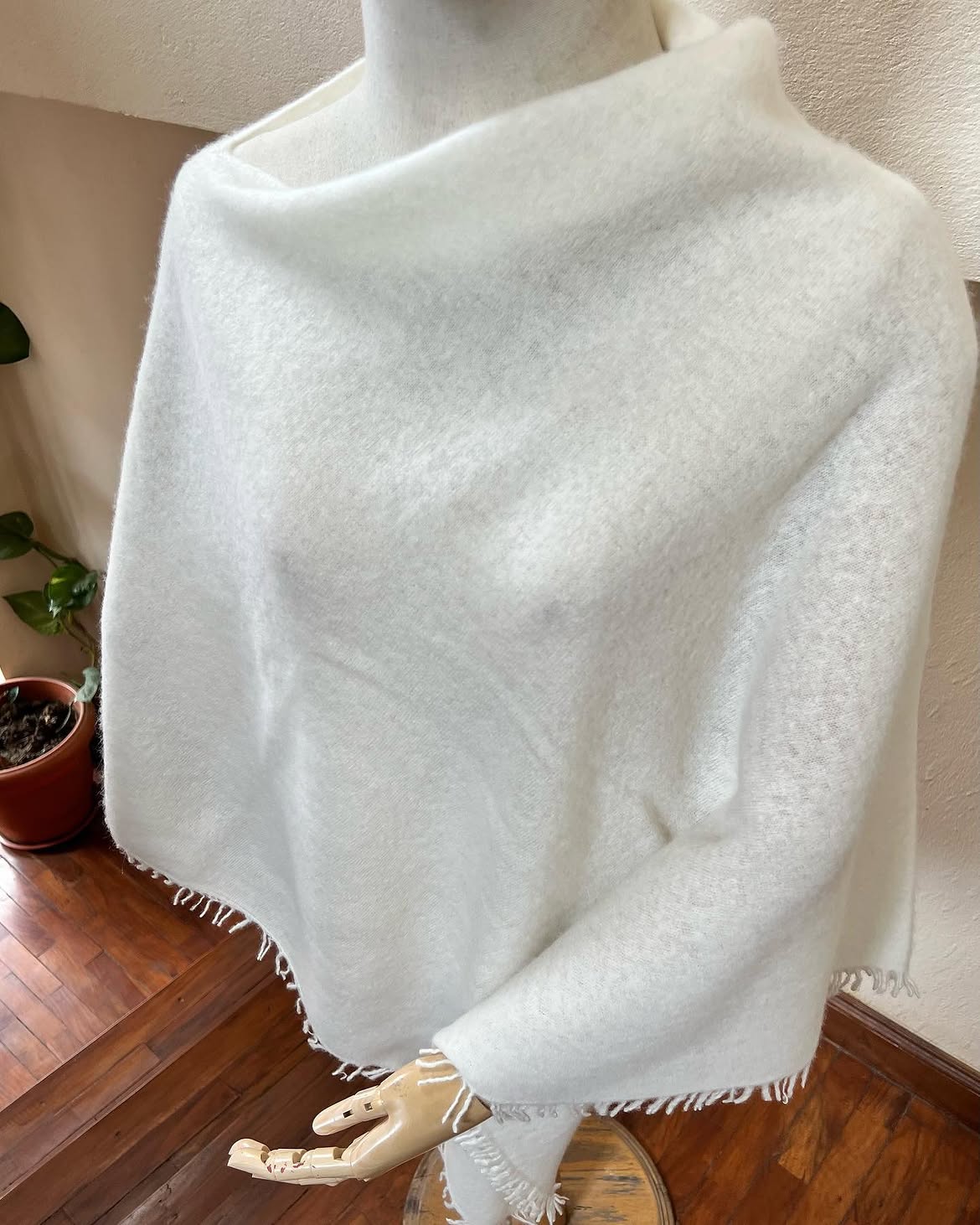

1 What is Pashmina and how does it relate to Cashmere?
Pashmina, known as cashmere in English, is sourced from the high plateau regions of Kashmir, Nepal, and the central plains of Inner Mongolia in India and Persia. Cashmere comes from the soft fur of a special goat called Capra Hircus.
These goats live at extreme altitudes of 14,000 feet above sea level, where winter temperatures drop below minus 30 degrees Celsius. Pashmina is the extra-soft underfur beneath the goat’s outer hair. Each goat yields only about 3 ounces (90 grams) of this special wool annually, meaning it takes the wool of three goats to craft one woven Pashmina shawl.
In essence, Pashmina and Cashmere are the same fiber. Pashmina is simply the original Indian/Persian term, whereas "cashmere" derives from the Kashmir region of India.
2 How are traditional Pashminas handcrafted in Nepal?
The collection of Pashmina fiber happens each spring and is done primarily by hand. Artisans use a traditional spinning wheel called a charkha to spin the yarn—a meticulous job requiring immense patience, skill, and dedication.
Because Pashmina yarn is too delicate for the mechanical vibrations of power looms, traditional shawls are woven exclusively on handlooms. Furthermore, the signature tassels are twisted and knotted entirely by hand, taking a weaver hours of careful work per shawl.
Hand-Dyeing: Experienced dyers add color using generational techniques. To maintain eco-friendly standards, only natural, azo-free dyes are used.
3 What is Grade-A Cashmere and what do Yarn Ply counts mean?
Grade-A Quality: Cashmere is categorized into grades. We provide exclusively Grade-A cashmere, measuring between 14 to 15.5 microns in diameter for supreme softness and durability.
Yarn Ply Guide: Ply counts represent strands of yarn twisted together. Higher ply offers greater warmth and thickness:
- 2 Ply: Sweaters, cardigans, scarves, wraps, hats, gloves, socks, and silk-cashmere stoles.
- 3 Ply: Sweaters, cardigans, shawls, wraps, ponchos, hats, and socks.
- 4 Ply: Heavy knitwear scarves, robes, throws, blankets, overcoats, and thick sweaters.
4 What is the difference between Pure Cashmere and Cashmere-Silk Blends?
Pure Pashminas (100% Cashmere): Softer, plusher, and warmer compared to blends. They have a loose, fluffy, open weave that provides ultimate comfort.
Silk-Blended Pashminas (65%–70% Cashmere & 30%–35% Silk): Utilizes a 15th-century heritage technique where silk runs along the length and cashmere runs along the width. This results in a denser fabric featuring a slim drape, elegant sheen, and smooth feel.
5 How should I care for and wash my Cashmere garments?
While dry cleaning is always recommended for valuable items (note: cashmere coats, jackets, and pants should never be washed at home), you can easily hand wash your sweaters and scarves at home:
- Gently hand wash in lukewarm water with hair shampoo dissolved completely.
- Rinse with a small amount of hair conditioner for enhanced softness.
- Wash colored garments separately. Do not use bleach.
- Gently squeeze out excess water without twisting or wringing.
- Dry flat away from direct heat and sunlight. Press with a damp cloth and cool iron from the inside.
6 How do I store Cashmere during summer and prevent pilling?
Storage Tips: Clean garments before storage to prevent food stains from oxidizing or attracting moths. Store in a well-sealed plastic box in a cool, dry place away from moisture and direct light. Use cedar chips or mothballs for natural protection.
Managing Pilling: Tiny fuzzballs (pilling) are a natural characteristic of soft natural wools caused by friction against bags, belts, or rough clothing. Minimize friction by giving your garments rest days between wears and wearing smooth silk scarves instead of coarse metal accessories.